Precision in the Skies

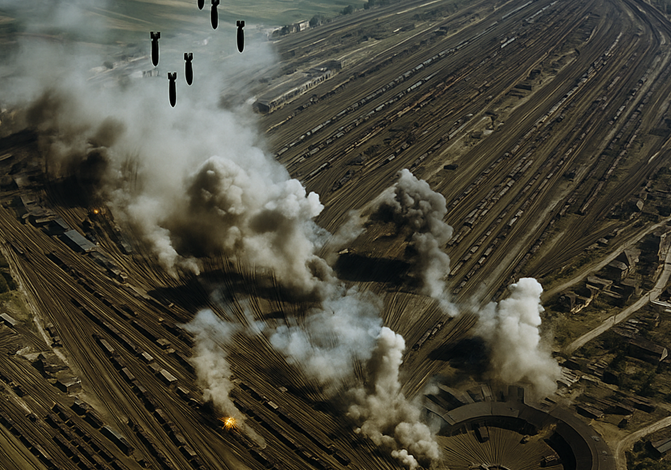
By late February, the Hummel crew was flying deeper into Germany. On February 25, 1945, their target was the key railroad marshalling yard at Aschaffenburg, about 26 miles southeast of Frankfurt. With the ability to handle 2,500 wagons a day, it was a crucial hub for moving supplies and troops. The yards had been struck once before in January, but only slight damage had been done.
This time, conditions were different. For the first time in weeks, the weather cleared enough to allow for a visual attack. Thirty crews gathered for briefings starting as early as 3:15 a.m., and by 6:50 the first Liberators began lifting off, each loaded with ten 500-pound bombs. To avoid lingering bad weather over central Germany, a long route was planned down over France.
Twenty-seven bombers reached the target, dropping a total of 262 bombs. The results were some of the most accurate the 392nd had achieved in weeks. The 576th Squadron, in particular, blanketed the target—direct hits on the double roundhouse, tracks cut, buildings destroyed, and at least fifty railroad cars damaged or wiped out.
One photo interpreter described it as “really excellent bombing,” noting that the strikes likely put the yards out of commission for a time.
The raid came with relatively little resistance. There were no enemy fighters, and flak was light. The biggest challenge was fuel. The long route home forced six crews to land at alternate fields, including airstrips on the Continent and emergency fields in England. The rest touched down at Wendling around 4:00 p.m.—a long day, but one marked as a major success.
For the Hummel crew, Aschaffenburg was proof of what could be accomplished when training, teamwork, and weather finally lined up. It was a reminder that precision mattered—and on that February day, the results spoke for themselves.


Comments